Data layer 01 — Genomic profiling
Data layer 02 — RNA-level TIME
27 gene panel
Add another dimension to genomic research
Comprehensive genomic profiling provides detailed mutation, copy number, fusion, tumor mutational burden and microsatellite instability data. The Determa-IO™ Test Kit (RUO) is designed to complement these datasets by adding a focused RNA-level view of the tumor immune microenvironment—spanning immune activation, immune suppression, stromal and tumor-biology components.
Built to complement, not duplicate, existing genomic profiling.
Determa-IO runs from the same FFPE RNA extract already present in many research workflows. It requires no second biopsy or separate extraction workflow, allowing laboratories to add TIME profiling without disrupting existing processes or increasing sample requirements.
Foundational layer
Comprehensive genomic profiling
Mutations, CNVs, fusions, TMB and MSI
Complementary layer
Determa-IO RNA-level TIME profile
Immune, tumor and stromal biology
Research view
Integrated multi-omic context
From FFPE RNA to research result
A fixed, consistent workflow across sample types and tumor origins
01
FFPE-derived RNA
From a biopsy or resection research specimen
02
Multiplexed RT-qPCR
Multiplexed eight-tube format
03
QuantStudio™ platform
Designed to run on the QuantStudio™ platform
04
Research result
RNA-to-result in under two hours
Same FFPE RNA extract—no second biopsy
Fixed panel across tumor types and research sites
Determa-IO Score for user-defined research analysis
Three states of the tumor immune microenvironment
The tumor immune microenvironment encompasses the tumor, immune cells, stromal components, extracellular matrix and vasculature surrounding the tumor. Their interactions can provide context for translational studies exploring tumor biology and tumor–immune interactions.

Immune-Desert / EMT
Characterized by sparse immune-cell involvement and a more stroma-dominated microenvironment, including biology associated with epithelial-to-mesenchymal transition.

Immune-Suppressed
Characterized by immune presence that is actively modulated or restrained, including signals associated with immune suppression and stromal biology.
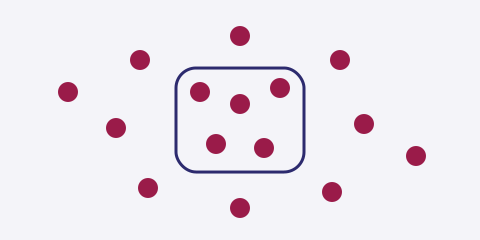
Immune-Activated
Characterized by dense immune-cell infiltration and an inflamed microenvironment. This state is generally associated with a higher Determa-IO Score.
Lower Determa-IO Score
Higher Determa-IO Score
27
27 genes across six biology-defined categories
The Determa-IO assay captures the interplay of immune-system, tumor and stromal biology.
CCL5
CD52
CXCL11
CXCL13
GZMB
IL23A
S100A8
TNFSF10
Immune Cell Recruitment & Activation
IDO1
KMO
KYNU
TNFAIP8
PTGDS
Immune Modulation & Suppression
ASPN
COL2A1
KRT16
HTRA1
ECM & Structural Components
Metabolic & Enzymatic Functions
DUSP5
FOXC1
PLAAT4
Transcription Factors & Signal Modulation
MIA
SFRP1
RTP4
ITM2A
Tumor Suppression & Cell Regulation